Indoor vs. Outdoor Pickleball Court Installation: Differences, Cost & Setup Guide

Pickleball’s rapid growth has led homeowners, schools, and community facilities to invest in dedicated courts. One of the first decisions in any project is whether to build indoors or outdoors. While both options support quality play, the requirements, costs, and long-term considerations for pickleball court installation vary significantly.
This guide breaks down the key differences between indoor and outdoor pickleball court installation, helping you choose the setup that best fits your space, budget, and usage goals.
Understanding Pickleball Court Installation Basics
Regardless of location, every pickleball court must meet regulation dimensions, provide consistent ball bounce, and prioritize player safety. A successful pickleball court installation involves proper site preparation, surface selection, line layout, and ongoing maintenance planning.
Working with an experienced pickleball court contractor ensures these elements are addressed correctly from the start, reducing the risk of premature repairs or performance issues.
Indoor Pickleball Court Installation
Indoor courts are typically installed in gyms, recreation centers, schools, or private facilities. They offer a controlled playing environment that supports year-round use.
Advantages of Indoor Installation
- Climate control: No weather-related disruptions
- Consistent playing conditions: Stable temperature and lighting
- Reduced surface wear: Protection from UV exposure and moisture
Indoor pickleball court installation is ideal for regions with long winters or facilities that need reliable scheduling.
Read Also: 7 Pickleball Court Surfacing Tips and Specifications for Perfect Courts
Indoor Surface Options
Common indoor surfaces include hardwood, synthetic sports flooring, and modular systems. Each option provides different levels of cushioning, traction, and maintenance requirements.
Experienced providers like Pine State Courts help clients select flooring systems that balance performance, durability, and long-term cost efficiency.
Cost Considerations
Indoor installations often have higher upfront costs due to building requirements, climate control, and specialized flooring. However, lower maintenance and longer surface life can offset initial expenses over time.
Outdoor Pickleball Court Installation
Outdoor courts remain the most popular choice for parks, schools, and residential properties. They are generally faster to build and require fewer structural considerations.
Advantages of Outdoor Installation
- Lower initial investment
- Faster construction timelines
- Flexible placement options
Outdoor pickleball court installation allows communities to expand recreational access without major facility modifications.
Outdoor Surface Requirements
Outdoor courts typically use asphalt or concrete bases with acrylic surfacing systems designed to withstand weather exposure. Proper drainage and base preparation are critical to prevent cracking and surface failure.
Professionals such as Pine State Courts emphasize weather-resistant materials and site grading to extend outdoor court lifespan.
Maintenance and Durability
Outdoor courts require more frequent maintenance due to sun exposure, temperature changes, and moisture. Regular inspections and resurfacing help preserve play quality.
See also: Flight Ticket To India From Usa: What Affects Airfare and How to Plan Ahead
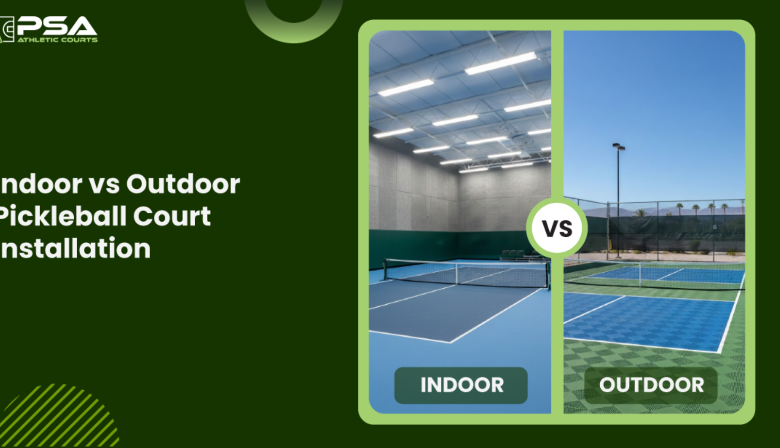
Indoor vs. Outdoor Pickleball Court Installation: Key Differences
Indoor pickleball court installation provides a controlled environment with protection from weather, allowing for consistent, year-round play and longer surface life. While indoor courts typically require a higher upfront investment due to building and flooring needs, they benefit from lower maintenance and more predictable performance over time.
Outdoor pickleball court installation is generally more affordable and faster to complete, making it a popular choice for parks, schools, and residential properties. However, exposure to sunlight, moisture, and temperature changes can increase surface wear and maintenance needs.
Choosing between indoor and outdoor options depends on climate, budget, and usage goals, which is why working with an experienced pickleball court contractor like Pine State Courts is essential for making the right decision.
Long-Term Planning and Future Use
Many facilities plan for multi-sport use or future upgrades. Discussing flexibility early in the design phase allows courts to adapt to changing needs without major reconstruction.
A well-planned pickleball court installation considers not only current use but also resurfacing cycles, lighting upgrades, and potential court expansion.
Final Thoughts
Choosing between indoor and outdoor pickleball court installation depends on climate, budget, usage frequency, and long-term expectations. Indoor courts offer consistency and durability, while outdoor courts provide cost-effective access and faster setup.Regardless of the option you choose, partnering with experienced professionals such as Pine State Courts ensures your pickleball court installation delivers safe play, reliable performance, and lasting value.